Dear friends and neighbors,
In my final e-newsletter of 2024 session, I mentioned that I’d be doing a deeper dive in subsequent newsletters into some of the great work we were able to accomplish this year. For this edition, I want to highlight what we did to increase community safety, grow behavioral health, and respond to the opioid and fentanyl crisis.
I’m kicking off with these in part because they were some of the top issues that you all highlighted in my constituent survey last fall, and that feedback helped inform our work this session.
Over the next month I’ll be highlighting our work in other areas, so stay tuned. As always, please reach out to my office if you have any questions-

|
|

I’ve heard from many of you with concerns about community safety: concerns about gun violence prevention, funding and oversight for law enforcement, and what we can do to reduce crime and help ensure everyone feels safer.
In 2022, we passed legislation to address explosive growth in catalytic converter thefts. Our approach is working. Catalytic converter thefts have gone down by 77% since passage of this legislation. This year we continued to build on our successes. We passed legislation this year that will help further deter this type of theft and keep it on the decline. We also expanded protections for our kids, ensuring that fabricated sexually explicit images that use a child’s likeness are punishable under the same statutes that criminalize child pornography. Additionally, we expanded definitions for crime victims and witnesses to ensure that everyone gets the support and services they need.
We continued our work on gun violence prevention, passing a set of bills that will work together to help keep us safe and keep guns out of the hands of those determined to use them to harm others. This includes HB 1903, which will help ensure that stolen firearms are reported to law enforcement before they can be sold illegally or used in violent crimes; HB 2118, which will help prevent gun theft by requiring gun stores to secure their inventory; and HB 2021, which will allow the Washington State Patrol to destroy seized firearms, a permission already given to all other law enforcement agencies in Washington state and which the agency has specifically asked the legislature to give them.
We continue to invest in expanding basic law enforcement training academy’s across the State. In addition to expanding training classes at the primary training site in Burien, we’ve expanded training sites to Pasco, Vancouver and are working to open a site in northwest Washington. The results have been transformative. We also heard from our cities and counties about challenging budget limitations, which is why we allocated $8 million for the state to take over the full cost of our basic law enforcement academies where new officers are trained.
|
|

We also knew we needed to make significant investments in behavioral health to help address the opioid and fentanyl crisis that is affecting so many people in our community and across our state. This year we invested $215 million in opioid and substance use disorder response and prevention, which includes $156 million for increased medication for opioid use disorder treatment, programs, and supplies, $16 million to support families and children safety, $10 million to support child-welfare and school-based prevention and intervention, and $6 million in outreach and support for our tribal partners.
We passed legislation that will help ensure there is age-appropriate education about the dangers of fentanyl in our K-12 schools, in our post-secondary education systems, and statewide through the Washington State Department of Health. We’ve ensured that life-saving overdose prevention medication will be more accessible for everyone, and substance use disorder treatment will be more accessible and responsive state-wide. We also passed legislation to help support young adults leaving treatment to ensure that they’re set up for success.
This is a crisis, and we’re taking it seriously with landmark investments and bipartisan legislation covering prevention, treatment, support, outreach, crisis response, and more.
Legislative Update: Sine Die – The Last Day of Session
 Dear friends and neighbors, Dear friends and neighbors,
Today is Sine Die (pronounced sigh-knee die), the last day of the 2024 Legislative Session! It’s called that because when we adjourned for the last time tonight, we did it without setting a day to come back – sine die is Latin for “without a day.” Short sessions go by quickly, and this year was no exception. However, we were still able to get a lot done over the past 60 days: we passed supplemental budgets to address our changing needs and sent 373 bills to the governor’s desk. I’m proud of the fact that 236 of those received unanimous votes, and most had strong bipartisan support. I’ll have more detailed updates about our work in the coming weeks, with newsletters focused on some of our priority areas, like housing, child care, behavioral health, and climate action. For now, I’m very excited to be back home and look forward to connecting with you all in district. |
|
|

As I mentioned, more updates to come, but I did want to touch on some highlights. When I kicked off this session, I talked about how optimistic I was about the work we’d be able to get done, as I reflect on the last 60 days I’m proud of what we’ve accomplished.
Our supplemental operating budget increases funding for K-12 education, housing, food assistance, and more. We’re investing a record amount in responding to the fentanyl and opioid crisis, and we’re continuing to fight climate change by supporting the transition to clean energy.
Our supplemental transportation budget makes smart changes to ensure that we’re not leaving any projects behind while we balance the significant increases in cost. The budget also keeps our commitments for infrastructure, fish passageways, and more.
Our capital construction budget is taking advantage of funds from the Climate Commitment Act and the capital gains excise tax (paid by only 3,354 households in all of Washington state during 2023) to invest heavily in child care, housing, clean energy, and salmon recovery.
We passed HB 1998, which creates more flexible housing options by legalizing co-living situations like apartments with shared kitchen spaces. These will help address the housing crisis and better support multi-generational housing.
We passed HB 2195 will fully fund the construction of new early learning facilities and provide a grant program to help get these facilities ready to open.
We passed HB 1368, which will help make zero emission school buses more affordable for districts across the state, especially in communities that have been the most impacted by climate change.
Finally, we passed HB 1929, which will help support our youth exiting behavioral health treatment, ensuring they have a roof over their head and access to the support they need to thrive post-treatment.
Legislative Update: Budget Rollouts and Town Hall Thank-Yous
Dear friends and neighbors,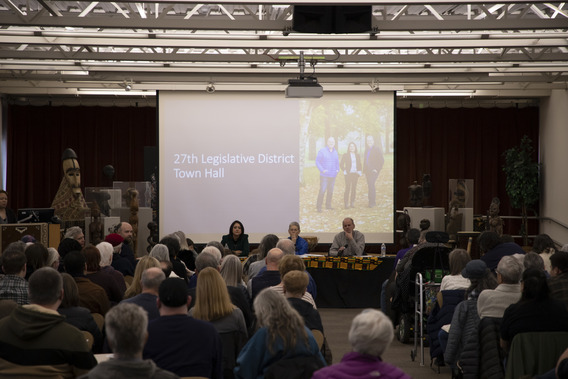
I wanted to kick things off this week by thanking the people who attended our town hall last weekend. We had some good conversations about housing, public safety, behavioral health and the other work in front of the legislature this session. I was also grateful for the chance to talk about our budget proposals (which I’ll go into more detail on later) and to hear from you about your priorities and concerns as we approach the end of session.
These town halls (and the survey I sent last fall and constituent conversations hosted throughout the district last summer) are incredibly helpful and informative for me. It’s truly an honor to represent you in Olympia, and all the phone calls, emails, meetings, encounters out in the community and more, help me to better represent you all. Thank you.
|
|

This week we rolled out our proposed budgets for this session. Our state runs on a two-year budget cycle and has three different budgets: the operating budget, which pays for the day-to-day work of the state; the transportation budget, which pays for roads, sidewalks, public transportation, and more; and the capital budget, which is the state’s construction budget. This is the second year of the cycle, so these are supplemental budgets that build on our investments from last session.
There’s more information about each proposal below, and in the coming days we’ll be working with the Senate to negotiate a final agreement on each.
The supplemental operating budget proposal focuses on re-investing in Washington families. We increase funding for special education, put more money towards housing affordability, and increased food supports for families across the district and state. We also continued our work to combat the climate crisis, make post-secondary education more affordable, and strengthen our public health systems. You can learn more about the budget here.
Our supplemental transportation budget balances the significant increases we’ve seen in project costs with the need to get things done. Many of our projects are moving forward as expected, though some will need to be re-bid. However, this budget still makes strong investments in the preservation and maintenance of our existing infrastructure, in improving traffic safety, and in correcting fish passages. You can read more about the budget here.
Our supplemental capital budget invests in building more affordable housing, childcare centers, behavioral health treatment options, and more. It also funds projects to develop clean energy, help our salmon recover, and clean the air in our public schools. You can learn more here.
Legislative Update: Floor action and a Town Hall
 Dear friends and neighbors, Dear friends and neighbors,
We’re wrapping up the fifth week of this year’s legislative session, and we’re coming up on a big deadline – the House of Origin cutoff – next week. That means that we have until next Tuesday, February 13th, to pass House bills and send them over to the Senate (that also means the Senate has until then to pass their bills and send them our way). We set up these deadlines at the beginning of session to make sure we can complete our work on time, but I’m always impressed with how fast the time goes before each cutoff. Because we have a limited amount of time left to send things over to the Senate, we’ve been on the House Floor voting on bills most of this week. At a high level, we’ve passed 70 bills so far this session. I’m particularly proud that of those, 44 have been unanimous and 60 have received strong bipartisan support. People who follow me on Facebook have heard this already, but despite what you might hear, a lot of the work we do in Olympia is bipartisan. The vast majority of the bills we pass get strong support from both sides of the aisle. Some examples from this week include:
I’ll have more updates about our work in my next e-Newsletter, |
|
|

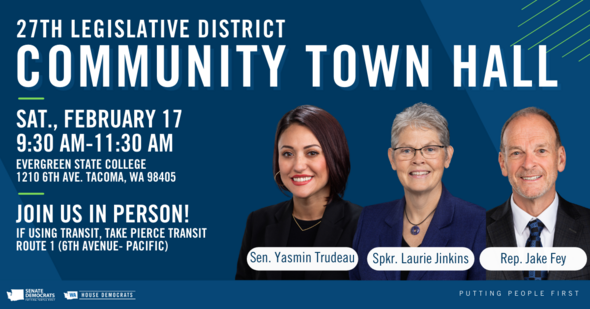
We’ve got a town hall coming up next week! Join us on February 17th from 9:30 AM-11:30 AM at the Tacoma campus of the Evergreen State College (1210 6th Ave. Tacoma, WA 98405). If you’re taking public transit, we’ll be on Route 1 (6th Avenue – Pacific). Come ask questions and get an update on our work this session!
You can also submit questions in advance here.
Hope to see you there!
Legislative Update: Floor Action, Congrats to Tacoma Public Schools, and Protecting Reproductive Health
Dear friends and neighbors,
Hello from Olympia, where we’re wrapping up our third week of this year’s legislative session. This year is a short session and it’s going by quickly, but we’re taking advantage of the time we have. We’ve already passed 32 bills off the House floor, half of which have passed unanimously. This includes:
- Giving law enforcement agencies a wider pool of candidates by allowing lawful permanent residents to serve in these positions (HB 1530)
- Removing the statute of limitations for survivors of childhood sexual abuse to sue for that abuse in civil court (HB 1618)
- Expanding access to anaphylaxis medication in our schools to help students that have allergic reactions get immediate care (HB 1608)
- Raising awareness about dual credit opportunities where high school students can earn college credit alongside their high school credit, giving them a jump start and reducing their potential student debt (HB 1146)
This is really just the tip of the iceberg, if you’re curious about what else we’ve passed you can learn more at leg.wa.gov, you can also check out bills by issue area here.
I also want to recognize Tacoma Public Schools for hitting a new record with a 91.1% graduation rate! This is the result of a lot of work done by our students, teachers, staff, and administrators over the years, and I’m so grateful for their commitment to our youth.
I’m thinking about how this news is connected to some other recognition we’ve received recently – Washington has been named the safest state for high school students, in no small part thanks to the steps we’ve taken support our students and protect them from gun violence. We were also recently recognized as one of the best states in the nation for working parents. These things are all connected, and while we’re celebrating the recognition we know there’s still more we can do for students and working families across our state.
We’ve got 41 days left this session, and I’m looking forward to what else we can accomplish.
|
|

Earlier this week we also recognized the 51st anniversary of the Roe v. Wade decision. I am proud of the work that Washington has done to protect access to reproductive care like abortion, and I continue to believe that Washington serves as a beacon of light for people impacted by draconian, anti-choice laws in other states.
However, the fight over reproductive health is happening everywhere. In the last eight years Republicans in the Washington State Legislature have sponsored over 40 bills to restrict access to abortion and reproductive care. We have stopped those bills every time.
We also know that just stopping those bills isn’t enough; we have to ensure that our protections for people seeking reproductive health care meet the moment. That’s why last year we passed bills that strengthen protections for people seeking reproductive care, and this year we’re working on legislation that will fine tune some of those protections.
Legislative Update: Kicking off the 2024 legislative session
 Dear friends and neighbors, Dear friends and neighbors,
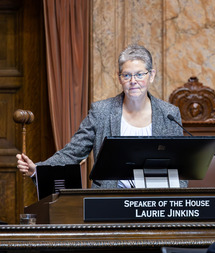
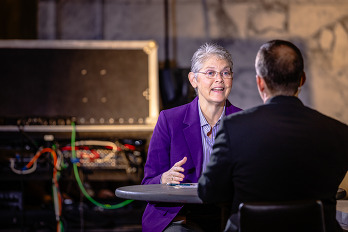
Earlier this week we kicked off the 2024 Legislative Session! Our legislature works on a biennial/two-year calendar, and we alternate between short sessions (60 days) and long sessions (105 days). This is a short session, and the second year of the biennium. One of the neat things about the second year of a biennial system is that bills we were unable to get to last session are automatically up for consideration again this year. Because of that, we’ve been able to get right to work and pass bills off the floor starting day 1, I’ll highlight some of those bills later in this newsletter. The first day of session also brings with it a host of ceremonial activities and long-time traditions. Monday morning I talked with Mike McClanahan at TVW about our goals for this session, you can watch that interview here. As Speaker of the House, I also have the privilege of doing the opening address on the first day of session, during those remarks I got into more detail about the work we’ll be doing over the next 60 days. You can read those remarks or watch them here. I’m optimistic and determined about this session. The people of Washington state expect us to work together and get things done, and I’m ready to do that. As we’re looking at the issues we need to address this session it’s clear how connected everything is, housing and behavioral health, child care and our workforce, the climate and our economy. Our challenges don’t exist in silos, and we cannot solve them in silos. For the next 60 days we’ll be pushing hard to make positive change for people across our state, and I’ll keep you posted on our work. |
|
|

Short sessions go by quickly, but we’re committed to using every second we can to help make our state a better place. That’s why we had legislation ready for a vote on the floor starting day 1. We know the threat that climate change poses, so we passed legislation to help our local jurisdictions respond to extreme weather events (HB 1012). We know that the housing crisis is deeply impacting people across our state, so we made it easier to build more housing (HB 1245). We know that we have to protect kids from abuse, exploitation, and trafficking, so we passed legislation prohibiting marriage for minors under 18 years old (HB 1455). There’s lots of work to do, and much more to come over the next 55 days.
Happy holidays, and FAFSA applications open soon
 Dear friends and neighbors, Dear friends and neighbors,
This will be my last e-newsletter of 2023! I hope that you are all able to spend time with family and friends as we celebrate this holiday season and the start of a new year. I wanted to express my gratitude for all the ways you’ve shown up this year, from emailing and calling the office to showing up at town halls and community coffees, this community makes me so proud. I may be biased but I definitely have the best constituents. I also wanted to pass along a little information about how to get involved in the upcoming legislative session. We’ll start next year’s 60-day session bright and early on January 8th, and are keeping many of the pandemic-era options for virtual engagement, so you don’t need to go to Olympia to get involved!
|
|
|

I also wanted to pass along some information about FAFSA/WAFSA (Free Application for Federal Student Aid/Washington Application for State Financial Aid) applications. If you’re considering attending higher education, getting a credential, or doing an apprenticeship program in the 2024-2025 academic year than please apply! Washington has one of the best financial aid programs in the country, and we want everyone to take advantage of it. This application qualifies you for things like the Washington College Grant, which is free funding that does not need to be repaid and can cover the entire cost of attendence for families with lower incomes.
Applications will open by the end of the month, and the application process has been re-designed and will hopefully be easier than ever. You can learn more about the FAFSA/WAFSA and how to apply here.
Food Assistance Availability
 Dear friends and neighbors, Dear friends and neighbors,
As we head into the holidays I wanted to take some time to talk about the resources available (below) for anyone facing food insecurity. We know that nearly 700,000 people in Washington don’t have consistent access to enough food for everyone in their household. Last session we passed legislation to help meet the need left by reduced federal funding, we expanded free school meals to 90,000 additional students, and removed barriers for college students to access basic needs like food, water, housing and childcare. We invested $95 million in food assistance programs, $81 million for refugee supports, and $44 million to fund an increase for Temporary Assistance for Needy Families (TANF), and other cash assistance programs. We also invested $19 million in TANF for diaper subsidies and a time limit extension. This is good work, but there’s more to do next session. In the meantime, if you or your family would be helped by any of these food or cash assistance programs, I have more information below. |
|
|

To learn more about temporary assistance for needy families (TANF) click here.
To learn more about food assistance (called Basic Food in Washington, also known as Supplemental Nutrition Assistance Program or SNAP) click here.
To apply for either/both TANF or Basic Food, or other state assistance programs, click here.
To learn more about food banks in Pierce County click here. To find your closest food bank click here. (This includes Nourish Pierce County food banks, you can find more information about their food banks and what to expect here.)
To sign up for home delivery of food assistance click here.
|
|

I also wanted to pass along a reminder that the House Page Program has started accepting applications for next session. This is an opportunity for students ages 14-17 to come to Olympia for a week and learn more about how our state legislature works. Students page for one week at a time, attending a Page School to learn more about the legislative process and supporting the operations of the House during floor action and with other daily tasks. Pages also receive a stipend for their time and can earn community service hours.
You can learn more about the program here, and apply for the page scholarship here. Interested students should complete an application as soon as possible – the 2024 session only runs for 60 days and the first pages will serve the week of January 8-12.
The Page Program, 2024 Legislative Priorities Survey, and a Working Families Tax Credit Update
Dear friends and neighbors,
Thank you so much to everyone who filled out the session priorities survey in my last e-newsletter! If you haven’t had a chance to fill it out, it’s not too late. You can still do so here. We’ve received a lot of responses so far, and I’m grateful for the guidance as we plan for next session. I will give an overview of the results in an upcoming newsletter.
|
|
The House Page Program has started accepting applications for next session, and I’m looking forward to sponsoring students from our district. This is an opportunity for students ages 14-17 to come to Olympia for a week and learn more about how our state legislature works. Students page for one week at a time, attending a Page School to learn more about the legislative process and supporting the operations of the House during floor action and with other daily tasks. Pages also receive a stipend for their time and can earn community service hours.
The program is open to all and I welcome applications from students of all backgrounds who live or attend school in the 27th District. Several years ago, a scholarship program was established to encourage any student, regardless of income level, to apply for and participate in the Page Program. The scholarship offsets the costs of traveling to and staying in Olympia.
You can learn more about the program here, and apply for the page scholarship here. Interested students should complete an application as soon as possible – the 2024 session only runs for 60 days and the first pages will serve the week of January 8-12.
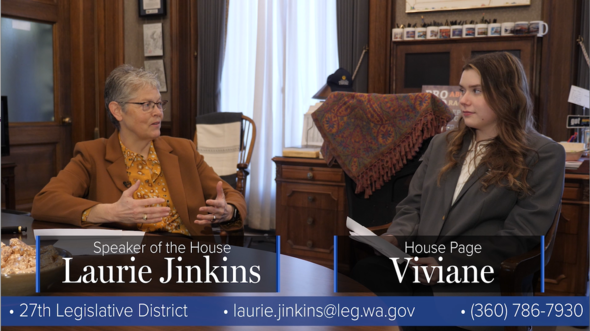
You can also check out this interview I did with Viviane, who paged in the House last year.
I’m looking forward to meeting this year’s 27th LD pages!
|
|

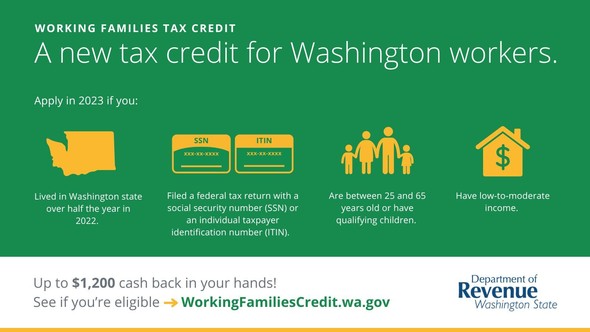
Earlier this year I mentioned that the Working Families Tax Credit was accepting applications, and I’m incredibly excited to know that we’ve already refunded more than $108 million to working families across the state. We’ve received nearly 190,000 applications, and it’s not too late for you to apply. You can learn more about whether you qualify and how to apply here.
Survey on 2024 Session Priorities
Dear friends and neighbors,
This interim I’ve covered a lot of the work we did last session (you can see all my previous e-newsletters here). As we get closer to the end of the year, and the beginning of next session, I’m reaching out to hear more from you about your priorities, so that I can use that feedback to guide my work. I have a survey here where you can help me to identify key issues for next session.

I am incredibly proud to represent our community in the legislature, and it’s an honor to have your trust. I look forward to going over the responses to this survey and using that to inform my work next session, and as always, please reach out to my office with any questions or concerns you may have.